

Last updated August 28, 2026
Free in-home measure and quote - PGT, CGI and CWS impact lines compared on your actual openings, style by style



 Before
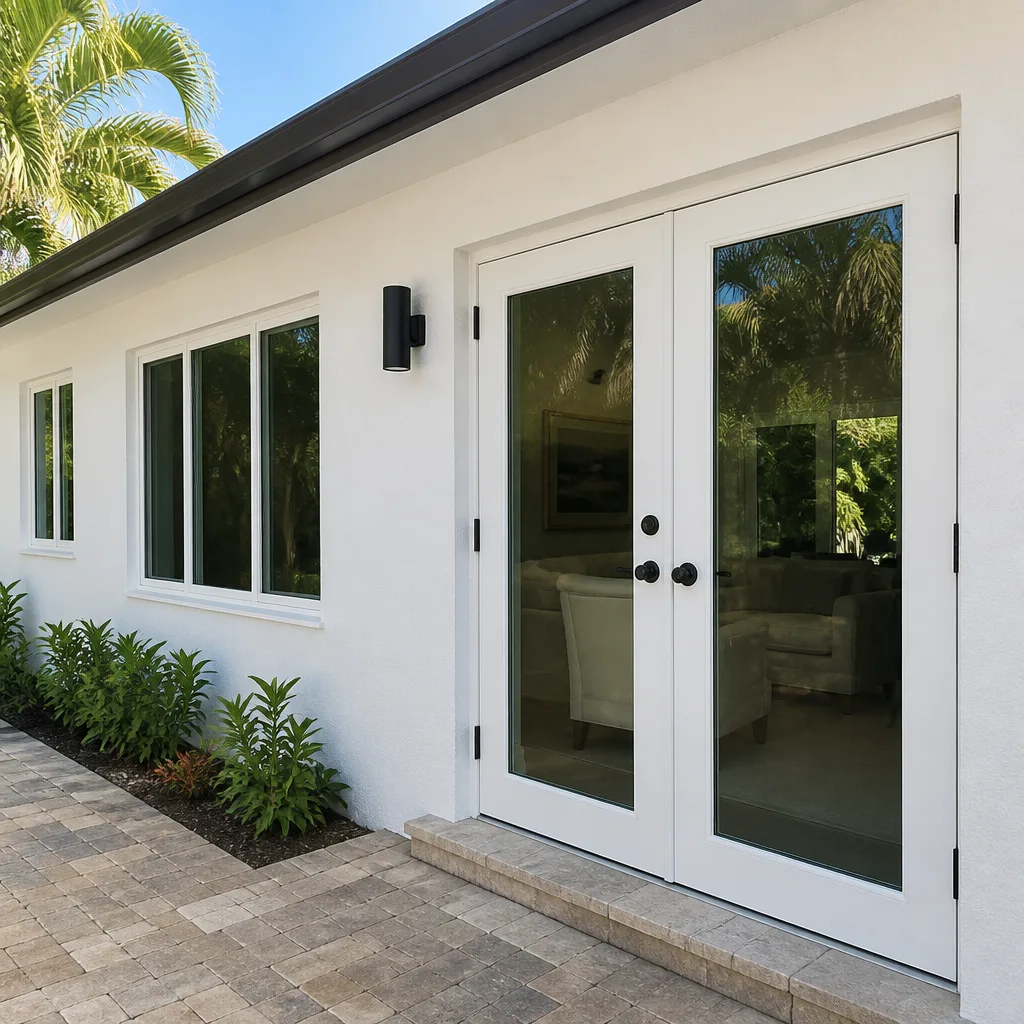 After
After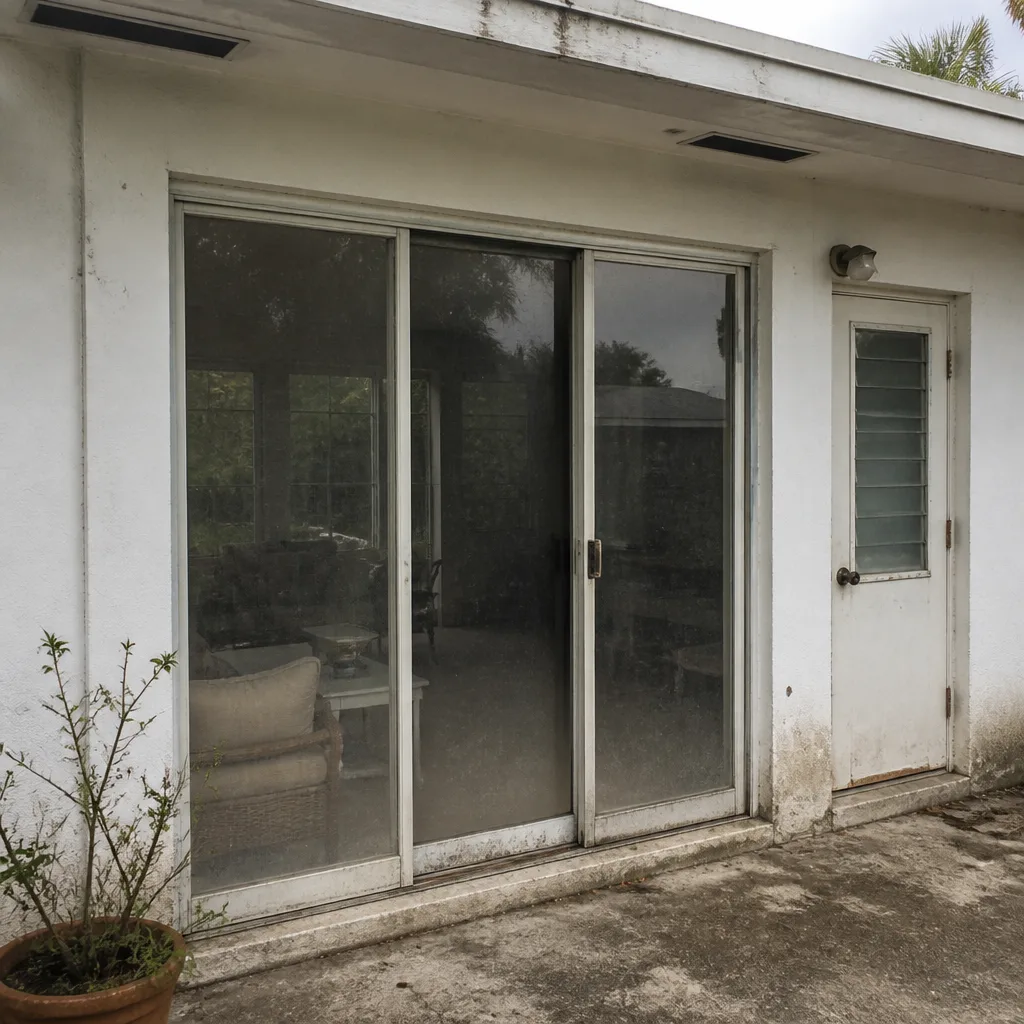 Before
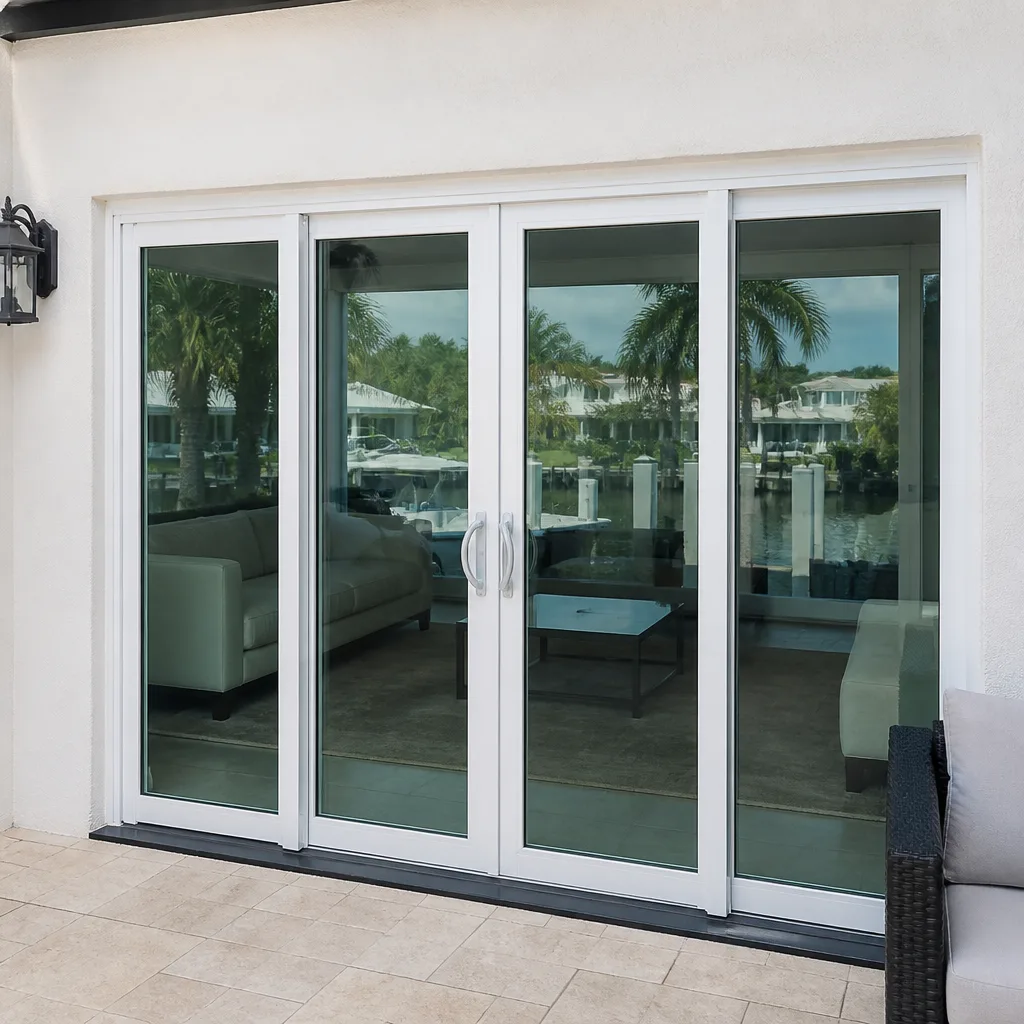 After
After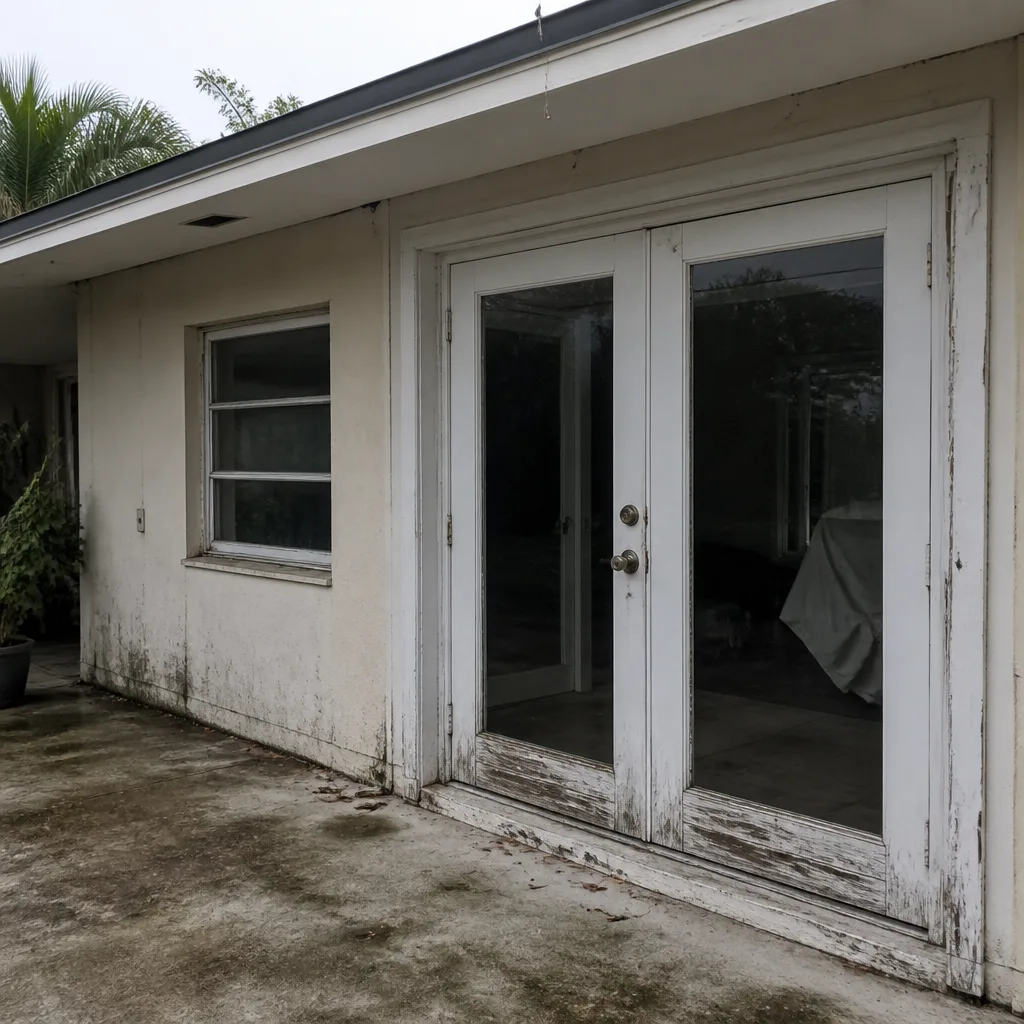 Before
 After
AfterWindows & Doors Warning Signs: A Fort Lauderdale Homeowner’s Reference Guide
A hairline crack running diagonally from the corner of a window frame is not “settling.” In a concrete block home, which covers most of Fort Lauderdale’s housing stock, that crack is often evidence of lintel movement, and the window is the messenger, not the problem. Most window and door failure in this city does not announce itself dramatically. It shows up as subtle physical evidence that homeowners have been trained by marketing to ignore or misattribute to other causes. This guide teaches you to read your own openings the way a glazier does, and you can find more guides & resources on our blog.
Quick Answer
The most common warning signs of window and door failure in Fort Lauderdale include diagonal cracks from frame corners, condensation trapped between impact glass panes, doors that bind or fail to latch only during afternoon heat, and water stains on interior sills that appear without visible leaks. Each of these has a specific cause, and only some require full replacement. Catching them early typically saves $800 to $2,400 per opening compared to waiting for structural or water damage to spread.
Table of Contents
- Reading the Frame: Cracks, Gaps, and What the Concrete Is Telling You
- Condensation Between Impact Glass Panes vs. on the Interior Surface
- Door Symptoms That Indicate Frame Racking, Not Hardware Wear
- Water Stains on Interior Sills: Three Sources That Aren’t the Window
- Cosmetic Sealant Shrinkage vs. Functional Seal Failure
- How to Document and Photograph Warning Signs for a Warranty or Insurance Claim
- Seasonal Warning Signs Specific to Fort Lauderdale’s Climate
- When Aging Hardware Is the Culprit, Not the Window or Door
Reading the Frame: Cracks, Gaps, and What the Concrete Is Telling You
In Fort Lauderdale, most homes built before the 1990s and many built after are concrete block construction. Concrete block does not flex the way wood framing does. When you see a hairline crack starting at the corner of a window frame and running at roughly a 45-degree angle into the wall, you are looking at a load transfer problem, not a cosmetic blemish. The lintel above the opening, the concrete header that carries the weight of the wall above the window, has shifted or begun to fail. The window frame is simply recording that movement.
We have seen this pattern in neighborhoods from Victoria Park to Riverland dozens of times. A homeowner patches the crack with spackle, paints over it, and six months later the crack returns, only wider. The window did not fail. The opening did. That distinction matters because replacing the window without addressing the lintel means installing a new window into a compromised opening. The new window will crack, bind, or leak within two years, and the manufacturer warranty will not cover it because the failure originates outside the window assembly.
Other frame-level warning signs to look for:
- Gaps appearing between the interior trim and the drywall that widen and narrow with the seasons. Concrete block expands and contracts with temperature and moisture. A gap that opens in August and closes in January may be normal thermal movement, but a gap that never closes indicates the frame is no longer anchored properly.
- Visible daylight around the edges of a closed, locked window or door. In a properly set opening, you should not see light. If you can see light, air and water can get through. This is a measurable failure, not a perception problem.
- Diagonal cracks that step, like a staircase, following the mortar joints in a block wall at the corner of an opening. This pattern indicates differential settlement or lintel rotation, and it deserves a structural assessment before any window work happens.
- Separation between the exterior stucco and the window frame where the gap is wider at the top than the bottom. This is a classic sign of frame sag.
Fort Lauderdale’s high water table contributes to soil movement under slabs, and older homes in areas like Sailboat Bend and Shady Banks sit on fill that compacts over decades. When the slab shifts, the block walls above it shift, and the openings are the first place that movement becomes visible. That is why we treat the frame as the primary diagnostic zone. The glass, the sash, the hardware, all of it comes after.
Condensation Between Impact Glass Panes vs. on the Interior Surface
If you have impact windows and you see condensation, the location of that moisture tells you everything about the cause. Condensation trapped between the panes of an impact-rated insulated glass unit means the hermetic seal has failed. The desiccant inside the spacer, the material that absorbs ambient moisture, has become saturated, and the inert gas between the panes, typically argon, has escaped. This is a manufacturing or installation defect, and it will not dry out on its own. The glass unit needs replacement. In a Fort Lauderdale home, this type of failure is often accelerated by repeated thermal cycling: intense afternoon sun on west-facing elevations heats the glass assembly, the metal spacer expands, and the seal slowly loses integrity over years.
Condensation on the interior surface of the glass, the side you can touch from inside the room, is a completely different problem. That is indoor humidity meeting cooler glass. It means the window is doing its job as a thermal barrier, and the interior air is carrying more moisture than it should. The causes are usually HVAC-related: an oversized air conditioner that cools without running long enough to dehumidify, poor bathroom exhaust, or a missing vapor barrier in the slab. Replacing the window will not fix interior surface condensation. Fixing the humidity will.
The rule of thumb we give Fort Lauderdale homeowners:
- If you cannot wipe the moisture away because it is between the panes, the glass unit has failed. Contact the installer or manufacturer.
- If you can wipe it away and it returns on the room side, the issue is interior humidity, not the window. Check the AC run times, the bathroom fans, and whether the home was built with a proper vapor barrier.
- If the condensation appears only on certain days and disappears by mid-morning, it is likely dew point related, more common in spring and fall when nights are cool and days are warm. Adjusting the interior temperature or running a dehumidifier may resolve it.
One detail worth noting: impact glass from manufacturers like PGT and CGI is built with a heavy laminated interlayer. When a seal fails in impact glass, the failure can present differently than in standard insulated glass. You may see a faint haze or a slightly distorted reflection before you see actual droplets. If the glass ever looks like it has a film you cannot clean off, that is the moisture degrading the low-E coating from inside the unit. At Impact Windows in Fort Lauderdale, we inspect these seal failures during our seasonal tune-ups, and we document them for warranty claims while the manufacturer’s coverage is still active.
Door Symptoms That Indicate Frame Racking, Not Hardware Wear
A front door that does not latch on the first push is not always a worn strike plate. In Fort Lauderdale, where a summer afternoon can push surface temperatures past 120 degrees on a south-facing entry, a door that binds at the top corner only during the heat of the day is telling you the frame has moved. Wood and fiberglass door frames expand in high heat, but racking is different: the frame itself has shifted out of square because the rough opening was never properly shimmed, or the slab has settled under the threshold.
Here is how to tell the difference between hardware wear and frame racking:
- Hardware wear is consistent. A worn latch fails to catch regardless of temperature or time of day. Frame racking is intermittent. The door works in the morning, binds at 3 p.m., and works again after sunset.
- Hardware wear shows wear. Look at the strike plate. Is the lip rounded from years of contact? If yes, the latch has been misaligned for a long time, which itself may indicate a slow frame shift that finally crossed a threshold.
- A top corner gap that appears only in afternoon heat, a gap you can see daylight through at 4 p.m. but not at 9 a.m., means the frame is expanding and rotating. This is especially common on west-facing doors in neighborhoods like Poinsettia Heights and Coral Ridge, where afternoon sun hits the entry directly.
- The door drags on the floor or scrapes the threshold at the latch side. This means the hinge side has dropped, which is either a hinge failure or a structural shift in the jamb.
Frame racking is also common on sliding glass doors. A slider that was smooth in January and sticks in August is often binding because the track or the frame has expanded and warped. In concrete block homes, sliding door frames are set into openings that may be moving slightly with the slab. We have documented cases in Fort Lauderdale where a patio door that had operated perfectly for fifteen years began binding every summer, and the root cause was a cracked corner on the concrete pad outside, not the door rollers.
If your door shows any of these signs, do not adjust the hinge screws and call it done. That may buy you a week, but the underlying movement will continue until the frame cannot close at all. Then you have a security problem, because a door that cannot latch is an open invitation in any neighborhood from Lauderdale Manors to Rio Vista.
Water Stains on Interior Sills: Three Sources That Aren’t the Window
A brown water stain on an interior sill below an impact window is alarming, and in our experience, Fort Lauderdale homeowners assume the window is leaking. That assumption is wrong more than half the time. Impact windows are built to a rigorous standard, and the frames are set with multiple layers of flashing and sealant. Before you blame the window, rule out these three sources, which produce the same stain pattern:
- Condensation runoff from the interior side of the glass. In a humid home, moisture beads on the glass, runs down, and pools on the sill. Over months, that standing water wicks into the sill material and leaves a stain. The fix is a dehumidifier or an HVAC adjustment, not a window replacement.
- Leakage from the wall above the window. Water enters through a compromised roof flashing, a cracked stucco plane, or a failed caulk joint at the fascia, travels down inside the wall cavity, and exits at the first horizontal surface it finds, which is often the window header or the sill. The window is the exit point for the water, not the entry point. We have traced interior sill stains in homes across Fort Lauderdale to a failed roof boot three stories up.
- Weep hole blockage on the window’s exterior bottom rail. Impact windows and most modern frames have small drainage channels called weep holes along the exterior bottom edge. These are designed to let incidental water drain out. When they clog with dirt, salt spray, or insect debris, the water backs up and eventually finds its way inward.
To determine the source, wait for or simulate the conditions. On a dry day, run a garden hose along the exterior wall above the window for ten minutes and watch the interior sill. If the stain stays dry, the water is coming from somewhere higher. If it appears, you have narrowed it down. Then check the weep holes: they should be clear and visible along the bottom exterior rail. If they are clogged, clear them gently with a soft brush and see whether the problem resolves.
If none of these tests produce water and the stain persists, then the window assembly itself likely has a seal failure or a flashing detail that was not properly installed. That is when you call in a professional. Our team at Window Installation in Fort Lauderdale has traced more of these stains than we can count, and the source is rarely where the homeowner first looked.
Cosmetic Sealant Shrinkage vs. Functional Seal Failure
Caulk and sealant around window and door frames shrinks as it ages. That is normal. Every exterior sealant, from the best urethane to the cheapest latex caulk, loses volume over time. The question is whether the shrinkage is cosmetic or functional, and the difference is whether water can enter the wall assembly.
Cosmetic shrinkage looks like a hairline separation along the edge of the bead, a crack running parallel to the frame, where the sealant has pulled slightly away from the stucco or the frame material. The bead is still attached on both sides, and the crack does not penetrate to the back of the joint. You can test this with a thin feeler gauge or a piece of paper: if the paper cannot slide more than a quarter inch into the gap, the seal is still functioning. This is a re-caulk situation, a maintenance item, not a repair.
Functional seal failure is different. It looks like a crack running perpendicular across the bead, opening up like a split in old rubber. Or the sealant has separated entirely from one surface and you can push it with your finger and feel it flex. Or, most telling, the sealant has receded so far that you can see the back of the joint, the raw edge of the rough opening. At that point, water is entering the wall assembly, and on a Fort Lauderdale home, water intrusion is not a hypothetical. It is the beginning of mold, rot in any wood framing, and long-term damage to the sheathing.
Here is the practical guidance:
- Inspect sealant joints twice a year, once in March before hurricane season and once in October after the summer heat has done its worst.
- Look for perpendicular cracks first. These are the fails.
- Test suspect areas with a water hose on a low-pressure setting. Seal failure will show up as moisture on the interior face of the frame within minutes.
- If you recaulk, remove the old bead completely first. New caulk over old failed sealant is a patch job that will fail within a year.
The salt air along Fort Lauderdale’s coastal corridors, from Harbor Beach to Las Olas Isles, accelerates sealant degradation. Homes within half a mile of the ocean often need re-caulking every four to six years, while inland homes may go eight to ten. If your home has impact windows from manufacturers like PGT or CGI, the sealant details around the frame are your responsibility, not the manufacturer’s. A failed sealant joint voids the water-tightness of the entire assembly.
How to Document and Photograph Warning Signs for a Warranty or Insurance Claim
When you file a warranty claim with a window manufacturer or an insurance claim after a storm, the adjuster or the claims examiner starts from a position of skepticism. They have seen thousands of claims, many of them weak. The quality of your documentation determines whether your claim gets approved or denied, and most homeowners make the same fundamental error: they take a close-up photo of the damage with no context. A close-up tells the adjuster nothing about scale, location, or severity.
Here is the documentation protocol we recommend to Fort Lauderdale homeowners, and it is the same protocol we use when we submit warranty paperwork on behalf of our customers:
- Take a wide establishing shot first. Stand far enough back to capture the entire window or door within the wall. This shows the adjuster where the damage is in the assembly and how it relates to the opening.
- Take a mid-range shot. Frame the photo so the full window or door fills the image. Include at least one edge of the frame and the surrounding wall material.
- Take close-up shots of the specific damage. Use a coin, a ruler, or a tape measure in the photo to establish scale. A hairline crack means nothing without a reference. A crack that is 1/32 of an inch is very different from one that is 1/8 of an inch.
- Photograph from an angle, not straight on. Straight-on photos flatten the image and hide depth. Shooting at a 45-degree angle captures the shadow detail that shows how deep a crack or gap actually is.
- Use natural light, not flash. Flash creates glare and washes out the detail you are trying to document. Late morning or early afternoon light works best, especially on south-facing elevations.
- Record the date and the conditions. Write down the date, the time, the outdoor temperature, and the recent weather. If a door binds only in afternoon heat, the adjuster needs to know the temperature when you photographed it.
- Keep a running file. Photos from six months apart that show a crack widening over time are far more persuasive than a single photo.
For insurance claims after a storm, document the same way, but also photograph the surrounding area. The adjuster will want to see whether tree debris, wind direction, or flooding contributed. And if you have impact windows or doors installed by a licensed contractor, include the installation paperwork. A properly documented install from a Window Replacement in Fort Lauderdale contractor strengthens the claim because it establishes the baseline condition before the damage occurred.
Seasonal Warning Signs Specific to Fort Lauderdale’s Climate
Fort Lauderdale has two seasons: hot and wet, and hotter and wetter. The environmental load on your windows and doors is relentless, and certain warning signs show up at predictable times of year. Knowing the seasonal pattern helps you distinguish normal behavior from developing problems.
Summer, July through September: The afternoon heat hits its peak, and thermal expansion is at its maximum. This is when you will notice doors that bind, sliders that stick, and frames that rub. If a door only misbehaves in the afternoon during these months, it is thermal, and the question is whether the expansion has permanently deformed the frame. Watch for windows that refuse to open or close smoothly on the west elevation. And pay attention to the caulk joints: the summer sun bakes them, and any joint that was marginal in the spring will likely open by late August.
Hurricane season, June through November: The obvious concern is impact protection, but the subtler warning signs are in the flashing and the weep holes. Before the first named storm heads toward Broward County, inspect every window and door’s exterior drainage. A clogged weep hole in a Category 1 storm will funnel water into the wall, and you will not know it until the stain appears weeks later.
Winter, December through February: Fort Lauderdale winters are mild, which makes them the best time to inspect for long-term movement. The cooler, drier air lets materials contract, and gaps that were hidden by summer expansion become visible. Walk the perimeter of the house and look at the caulk joints and the frame-to-wall junctions. If you see gaps in January that were not there in July, the materials are not recovering from their expansion, which means permanent deformation.
Spring, March through May: This is the sweet spot for maintenance and repair. The weather is stable, humidity is moderate, and any sealant or flashing work will cure properly. We book most of our Window Installation in Fort Lauderdale work during this window, before the summer heat arrives and before hurricane season officially begins.
When Aging Hardware Is the Culprit, Not the Window or Door
Sometimes the warning sign is not the window or the door at all. It is the hardware that operates it. In a Fort Lauderdale home that has been lived in for twenty or thirty years, the window sashes and door hardware have cycled tens of thousands of times, and the failure points are often in the small parts: the balance springs, the rollers, the hinges, the strike plates.
Here is how to identify hardware failure versus assembly failure:
- A window that will not stay open and slams shut when released is a failed balance spring or a broken sash cord. This is a hardware repair, usually under $200 per window, and it does not require replacing the glass.
- A sliding door that shudders or grinds when you push it but the frame is square and the track is clean has worn rollers. New rollers cost less than a new door by an order of magnitude.
- A hinge that squeaks or sags on a door that is otherwise square is a hinge replacement, not a door replacement.
- Locks that seize or handles that bind may need internal component replacement. On older doors from manufacturers like Therma-Tru, these parts are available as direct replacements.
The diagnostic question to ask is whether the problem is in the moving parts or in the surrounding structure. If you are not sure, a professional assessment is worth the cost. The alternative is spending $2,000 on a new window or door when a $75 part would have fixed the issue.
Common Mistakes to Avoid
- Painting over a returning crack. If a crack at a window corner comes back after you patch and paint it, the structure is moving. Painting over it again hides the evidence but does nothing for the cause. In a concrete block home, the cause is often a lintel issue that will worsen.
- Assuming interior sill stains are window leaks. More than half the interior sill stains we trace in Fort Lauderdale come from condensation runoff, wall cavity leaks from above, or clogged weep holes. Blaming the window without testing the other sources means replacing a window that was never the problem.
- Re-caulking over old failed sealant. New caulk over a cracked bead is a cosmetic fix that leaves the water entry path intact. Remove the old bead completely, clean the joint, and apply fresh sealant to a sound substrate.
- Ignoring intermittent door binding. A door that only sticks in afternoon heat is not fixed by adjusting the hinge screws. The frame is moving, and the movement will continue. Address the cause, not the symptom.
- Filing a warranty claim with a single close-up photo. Warranty examiners and insurance adjusters need wide shots, mid shots, scale references, and dated documentation. A blurry close-up of a crack is more likely to get denied than approved.
- Waiting until hurricane season to inspect impact windows. By June, the installation schedule across Fort Lauderdale is full and the weather is already testing your openings. Inspect in March or April, before the heat and the storms arrive.
- Confusing condensation between panes with interior surface condensation. One is a failed glass unit that needs replacement. The other is an indoor humidity issue that a new window will not fix. Knowing the difference saves thousands.
When to Call a Professional
Call a professional when the warning sign involves structural movement: diagonal cracks from frame corners, frames that have separated from the wall, doors that no longer latch at all, or water stains that persist after you have ruled out the exterior sources. These are not DIY situations. A miscalculated repair on a compromised opening in a concrete block home can turn a $500 fix into a $5,000 structural repair. The same applies to impact windows with failed seals: the gas between the panes has escaped, the desiccant is saturated, and the unit cannot be repaired in the field. It needs replacement by a licensed installer who can register the manufacturer warranty properly. TruePane Windows & Doors offers free estimates in Fort Lauderdale, call (754) 310-3589. We will inspect, diagnose, and put the findings in writing, with no obligation.
Frequently Asked Questions
Replacing the glass unit, the insulated glass assembly inside the frame, typically costs $280 to $520 per window in Fort Lauderdale, depending on the size and whether it is impact-rated glass. If the frame itself is compromised, a full window replacement runs $800 to $2,400 per opening, installed. Exact pricing depends on the specific window line and the condition of the opening. Call (754) 310-3589 for a written quote, estimates are free.
Yes, in most cases. If the binding is caused by hinge wear or minor frame expansion, adjusting the hinges, planing the door edge, or re-shimming the frame resolves it. If the binding is caused by slab movement or frame racking, the underlying movement must be addressed first, or the fix will not hold. We diagnose the cause before recommending any repair.
The easiest way is to check your installation paperwork for the manufacturer’s warranty registration. If you cannot find it, the manufacturer can look up the serial number etched into the glass corner. Impact windows from brands like PGT and CGI typically carry 10-year or lifetime limited warranties on the glass unit, but the warranty is only valid if it was registered. That is why TruePane registers both manufacturer warranty layers in writing, with durations stated, before the truck leaves the driveway.
No. Water stains on an interior sill can come from condensation runoff, from a leak in the wall above the window, or from clogged weep holes, none of which indicate a window failure. Only after ruling out those three sources should the window assembly itself be suspected. Our team at TruePane traces the source before recommending any work.
Twice a year: once in March or April before hurricane season, and once in October or November before the cooler, drier months. Coastal homes within half a mile of the ocean, in areas like Harbor Beach or Las Olas Isles, benefit from more frequent checks because the salt air accelerates sealant and hardware degradation.
Yes, when the scope requires it. Fort Lauderdale building codes govern impact window and door installations, and work done without a permit can void your insurance coverage and complicate a future sale. TruePane pulls the required permits, schedules the inspections, and does not leave the job until it has passed. Call (754) 310-3589 for an assessment of your specific project, and we will explain exactly what is required and why.
The Bottom Line
Windows and doors do not fail silently. They leave a record: a diagonal crack at the frame corner, a sealant joint that has pulled away from the wall, a door that binds at 3 p.m., a stain on the sill that appeared without an obvious source. The skill is in reading that record accurately. Most of the warning signs in this guide are correctable, and catching them early is always cheaper than waiting. In Fort Lauderdale, where the heat, humidity, salt air, and hurricane season test every opening year after year, a twice-annual inspection is the cheapest insurance you will ever buy. If you are not sure what you are looking at, call TruePane Windows & Doors home at (754) 310-3589. We have been doing this work in Fort Lauderdale long enough to know exactly what your windows and doors are trying to tell you.
Written by Dale Kessler, Owner at TruePane Windows & Doors, serving Fort Lauderdale since 2008.
Six Reasons Homeowners Choose TruePane Windows & Doors
Impact systems engineered to design pressures up to +/-100, matched to your wind zone - your openings hold when the storm arrives.
Low-E insulated impact glass from our manufacturer lines commonly cuts monthly cooling bills 20-30%.
Laminated impact glass shuts out up to 40% of outside noise - traffic, neighbors, weather.
Monitoring services run $30-90 a month. Laminated impact glass resists forced entry around the clock, with no subscription.
Florida homeowners average around 25% savings on the windstorm portion of their policy after protecting every opening - some homes qualify for more.
A full impact package upgrades curb appeal, buyer confidence and appraised value in one project.